
Work Breakdown Structure in Construction: How to Break a Project into Manageable Tasks
A construction project can have a detailed schedule and still leave important work undefined. An activity labelled “complete external drainage” may appear straightforward, but different people can interpret it differently. The estimator may include pipework and excavation. The site supervisor may expect inspection chambers, testing, backfilling, and reinstatement. The subcontractor may have priced only the installation.
These differences often remain hidden until work reaches the affected area. By then, materials may already be ordered, labour allocated, and other activities dependent on completion. What began as an unclear description becomes a practical delivery problem.
A work breakdown structure in construction helps teams establish a shared understanding of the work before they organise its timing, resources, and cost. It divides the agreed project scope into smaller components that can be defined, assigned, estimated, and monitored.
The value comes from making the work understandable. A useful construction WBS allows people responsible for planning, procurement, site supervision, and reporting to refer to the same defined packages throughout the project.
What Is a Work Breakdown Structure in Construction?
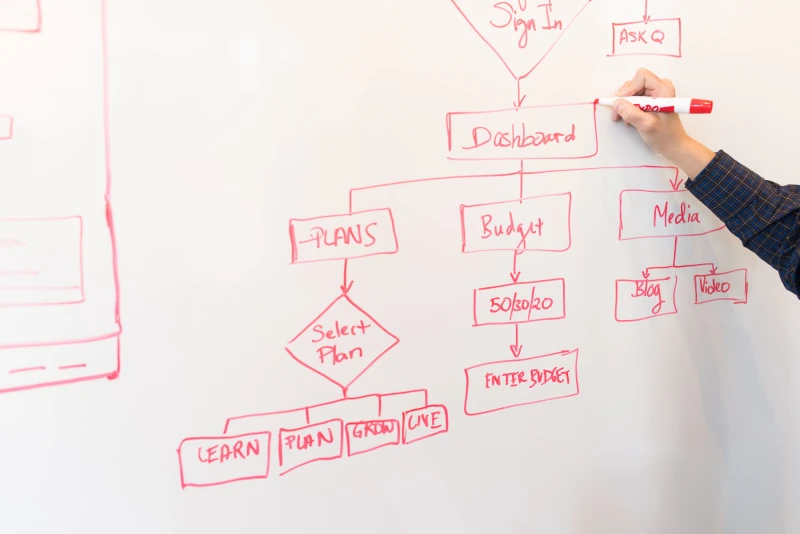
A work breakdown structure, commonly shortened to WBS, is a hierarchy that organises the project’s total agreed scope into progressively smaller components. The upper levels describe major project elements. Lower levels provide more detail until the work reaches packages that the team can manage effectively.
For a building project, the structure might begin with the complete development, separate into individual buildings and shared infrastructure, and then divide each building into components such as foundations, structural frame, envelope, finishes, and services.
The lowest level of a particular branch is its work package. A package should have a clear scope and an identifiable result. It should also be possible to assign responsibility, estimate its requirements, and establish how completion will be assessed.
Different branches may need different levels of detail. A complex services installation may require more decomposition than a small boundary wall. The structure should reflect the project’s management needs rather than follow an arbitrary number of levels.
How a WBS Differs from a Schedule
A WBS organises what the project must deliver. A schedule explains the activities, sequence, durations, dependencies, and dates required to deliver it.
Consider a package called “ground-floor internal partitions.” Its scope may include the defined partition systems, associated openings, specified finishes, and required inspections. The schedule could contain separate activities for setting out, framing, service coordination, boarding, inspection, and finishing.
Several scheduled activities can therefore belong to one work package. The package provides the scope boundary, while the activities describe how delivery will proceed over time.
This distinction matters because a task list can look comprehensive without covering the full scope. Teams may schedule installation activities while overlooking testing, temporary provisions, or completion records. Establishing the work packages first creates a stronger foundation for developing a construction project schedule.
Establish the Project Boundary Before Breaking Down the Work
Start by deciding whose scope the WBS represents. A developer’s project structure may include land-related activities, design, approvals, construction, and operational preparation. A main contractor’s structure should reflect the responsibilities included in that contractor’s assignment.
Review the relevant scope documents, drawings, specifications, schedules, and agreed clarifications. Identify the revisions that form the current basis. If important information remains outstanding, record the uncertainty rather than quietly filling the gap with an assumption.
Client-supplied equipment illustrates why boundaries matter. The client may purchase a specialist unit, but responsibility for unloading, storage, installation, connections, testing support, and protection still needs allocation.
The WBS should represent the agreed scope. It can help expose unanswered questions, but placing an uncertain obligation under a package does not establish that a particular party has accepted it.
Choose a Structure That Matches the Project
The upper levels should reflect how the project will be understood and controlled. Buildings, locations, systems, and major deliverables can all provide useful organising principles.
For a small office building, the main divisions might include substructure, frame, envelope, internal works, building services, external works, and handover deliverables. A multi-block residential development may first separate each block from shared roads, drainage, and utilities.
A refurbishment may benefit from dividing work by occupied zones or floors because access restrictions and phased completion shape delivery. Within each zone, the structure can then separate the relevant building components.
Keep the logic clear within each branch. If one heading represents a location, another a trade, and another a project phase, explain how they relate. Otherwise, the same work can appear twice or disappear between categories.
A useful test is whether a manager can understand what a reported cost or progress total includes simply by referring to the package definition.
A Construction WBS Example
Imagine a project to construct a small office building with parking, external lighting, and a drainage connection. This is an illustrative example rather than a complete project template.
The top level represents the complete agreed project. Beneath it, the team creates major elements for substructure, frame and envelope, internal works, building services, external works, and project closeout. Other obligations, including project management and temporary facilities, must also be accommodated within the chosen structure.
The external works branch is divided into drainage, parking construction, external lighting, and landscaping, where these form part of the assignment. Each branch is then reviewed to determine whether it is sufficiently defined for control.
External drainage may remain one work package on a small site. On a larger development, it may need separation by drainage system, geographic zone, or connection area.
The purpose is to create packages that make sense to the people managing them. A package should represent a recognisable portion of scope with clear boundaries, rather than a convenient heading that hides several unrelated obligations.
Decide How Much Detail Is Enough
A work package is sufficiently detailed when the team can estimate it, assign responsibility, plan its delivery, and measure its status with reasonable confidence.
“Complete building services” is usually too broad for direct management. It combines systems with different suppliers, technical requirements, interfaces, and completion evidence. Separating water supply, drainage, electrical installation, ventilation, and other applicable systems makes the work easier to control.
However, excessive detail creates its own burden. A WBS containing every minor site action becomes difficult to maintain and can duplicate the construction schedule.
Ask whether the responsible lead can explain what the package includes, what remains, and what is preventing completion. If those answers require reviewing a large collection of unrelated work, further decomposition may help.
Where a package is already clear, additional rows may add administration without improving decisions. The appropriate detail depends on complexity, risk, reporting requirements, and how the work will actually be managed.
Check for Missing Work and Overlapping Scope
The WBS should account for all work within its defined boundary. At each level, the components beneath a heading should collectively represent that heading’s scope.
This review must include less visible obligations. Testing, temporary access, protection, reinstatement, training, and handover information are easier to miss than permanent construction because they may not appear as obvious physical components.
Review neighbouring packages together. If an external lighting package includes a supply cable and the electrical distribution package includes the same cable, the estimate may double count it. If both exclude trench reinstatement, the project may contain a gap.
Temporary works also need an explicit approach. Depending on the project, they may sit within individual packages or under a separately managed element. Either arrangement requires clear boundaries.
The aim is complete coverage without duplicated responsibility for the same scope. Package descriptions and interface discussions are usually more effective for finding these issues than inspecting the hierarchy alone.
Define Each Package in a WBS Dictionary
Short package titles cannot carry every important detail. A WBS dictionary provides supporting definitions so that the team understands what each element means.
For an external drainage package, the entry could identify the starting and finishing connection points, included pipework and chambers, excavation and bedding responsibilities, testing obligations, backfilling, and reinstatement. It should reference the relevant drawings and specifications.
The entry should also identify exclusions, important interfaces, the responsible lead, and the evidence needed to demonstrate completion. Any outstanding assumptions should remain visible.
Keep the dictionary practical. It should explain boundaries and direct users to governing information rather than repeat every specification paragraph. Excessive duplication creates additional documents that can become inconsistent when designs change.
A concise, controlled package description gives estimators, planners, supervisors, and inspectors a shared reference. That consistency is especially useful when personnel change during delivery.
Assign Ownership and Review Interfaces
Each work package needs an identifiable lead who maintains a consolidated view of its status. Several contractors or departments may contribute, but someone should coordinate information, follow up constraints, and report unresolved issues.
This management assignment must remain aligned with contractual responsibilities. Naming a package lead does not transfer obligations between organisations.
Interfaces deserve deliberate attention. For a services installation, establish who forms openings, installs sleeves, seals penetrations, protects completed work, and repairs affected finishes. These activities can fall between trades if each party reviews only its own installation.
For drainage beside a parking area, the teams should agree when inspection and testing must occur before surfacing proceeds. They should also clarify who maintains access and who repairs any subsequent disturbance.
Reviewing these connections early helps turn separate package plans into a workable project delivery approach.
Connect Work Packages to Activities and Milestones
After defining the packages, identify the activities required to deliver them. External drainage might require survey confirmation, material approval, excavation, installation, inspection, testing, backfilling, and preparation of record information.
Link those activities to their package reference. The schedule can then provide detailed sequencing while management reports summarise progress against recognisable scope.
Dependencies still require separate analysis. A well-defined package does not automatically reveal that an authority connection approval, design release, or access arrangement must precede installation.
Construction project milestones should mark meaningful achievements within this delivery logic. “Drainage installation complete” and “drainage accepted and available for use” may represent different points.
Keep package references stable where possible. Activity dates and forecasts will change, but a consistent scope reference helps preserve comparisons between the original plan, current position, and expected outcome.
Connect the WBS to the Cost Estimate
A clearly defined package gives the estimator a basis for identifying labour, materials, equipment, subcontract work, supervision, and other applicable costs.
The estimate may contain more detail than the WBS. Several measured items, purchase orders, or accounting codes may contribute to one package. Establish the relationship early so that commitments and actual costs can be summarised consistently.
Avoid adding parent totals to their underlying package values. If the external works total already includes drainage and parking, adding those package totals again would double count the cost.
Shared costs need an agreed treatment too. Site facilities or common access provisions may remain centrally managed or be allocated through a defined method. Apply the approach consistently so that package comparisons remain meaningful.
The construction cost estimate should also preserve its assumptions. A package with unresolved design information may contain allowances that require review as the scope becomes clearer.
Measure Progress Against Defined Outputs
Agree how progress will be assessed before reporting begins. Different work packages need different measures, and installed quantity alone may not represent overall completion.
Suppose an illustrative drainage package contains 120 metres of pipe. Installing 90 metres represents 75% of the pipe length, but it does not establish 75% completion of the entire package if chambers, testing, backfilling, and reinstatement remain.
The reporting method should reflect those remaining obligations. Where weighted measures are used, explain their basis and apply them consistently.
Distinguish physical installation from inspection, acceptance, and readiness for use where those statuses affect decisions. A manager needs to know whether work is merely in place or can support the next activity.
Clear package definitions make these distinctions easier. They establish the output being measured and help prevent optimistic percentages from concealing unfinished responsibilities.
Maintain the WBS as the Project Develops
Review the draft with the people who will estimate, procure, supervise, inspect, and report the work. Their questions often reveal boundaries that appeared obvious during preparation but remain unclear in practice.
Once agreed, identify the WBS version and maintain a record of approved changes. A design revision may expand a package, create another deliverable, or alter an interface.
Clarifying an existing description is different from adding scope. Record the distinction and follow the project’s agreed change process where applicable.
Preserve stable identifiers where practical and retain the history of superseded elements. Otherwise, comparing the original budget with current commitments and progress becomes difficult.
A useful work breakdown structure in construction gives the team a shared understanding of the assignment. Clear packages connect scope to estimates, schedules, responsibilities, and completion evidence. That connection makes missing work easier to identify and gives project reporting a more dependable foundation.









0 Comments